
Water treatment in Southeast Michigan is about more than just improving taste. Addressing local water challenges, aging infrastructure, and long-term home protection is essential for homeowners in Southeast Michigan. Whether you’re dealing with hard water, chlorine taste, or emerging contaminants like PFAS, understanding your local water quality is the first step toward choosing the right solution.
Recent News On Water Issues in Southeast Michigan
PFAS Contamination Widespread Across Metro Southeast Michigan, 59 Water Systems Affected
PFAS contaminants have been detected in 59 southeast Michigan water systems, with many potentially exceeding new federal limits set in 2024. In Southeast Michigan’s Melvindale neighborhood, groundwater tests revealed PFAS levels up to 46 times the state’s maximum contaminant level, tied to Marathon Petroleum’s use of PFAS-containing firefighting foam over years of training and emergency response. In Southeast Michigan, the city spends $250,000 annually to remove PFAS from water drawn from the Huron River, where contamination traces back to two automobile supply plants in Wixom that discharged PFAS into the watershed.
In March 2026, the EPA added the Gelman dioxane site in Southeast Michigan to the Superfund National Priorities List, directing additional federal resources toward addressing 1,4-dioxane groundwater contamination that has affected the region for decades. For homeowners across metro Southeast Michigan, these overlapping contamination sources, industrial discharge, firefighting foam, and legacy chemical spills, create a complex risk profile that municipal treatment alone may not fully address.
Michigan’s Lead Service Line Crisis Remains Unfinished
Michigan’s ambitious plan to replace 580,030 lead and galvanized water service lines statewide is underway, but many residents remain unaware of whether their homes still have lead plumbing connections. Southeast Michigan has replaced 15,800 lead service lines since 2018, and its most recent compliance testing showed lead levels at 8 parts per billion, below the state action level of 12 ppb. However, testing is done at a sample of homes and cannot account for every individual property’s plumbing. Older homes with lead service lines, lead solder, or galvanized pipes that were once connected to lead are still at risk of lead exposure at the tap, when water sits stagnant overnight or during periods of low use.

Southeast Michigan Water Quality Report (WQR) Insights
The recent Southeast Michigan Water Quality Report offers detailed insight into the composition of local drinking water. Beyond regulatory compliance, the data reveals key factors like mineral content, disinfectant levels, and trace contaminants that influence how water tastes, feels, and interacts with plumbing systems.
Hard Water
Southeast Michigan water measures 100 ppm. Hard water is not a health concern, but it can leave mineral buildup on faucets, dishes, and appliances and may make soaps and detergents less effective over time.
Chlorine Levels
Measured around 0.84 ppm, chlorine is necessary for disinfection but can contribute to taste and odor issues at the tap and fuel the formation of disinfection byproducts.
Disinfection Byproducts (HAA5 & TTHMs)
Recent Southeast Michigan testing shows HAA5 (Haloacetic Acids) at about 24.5 ppb and TTHMs (Total Trihalomethanes) at about 45.3 ppb. These compounds form as a byproduct of chlorinating source water and are a common reason homeowners consider whole-house filtration.
Lead, Copper & Trace Metals
Recent testing shows lead at 0.000 ppm, copper at 0.002 ppm. Because lead and copper can enter water from household plumbing after it leaves the treatment plant, conditions at an individual tap can differ from system-wide averages in older homes.
While Southeast Michigan water meets regulatory standards, WQR data highlights common issues such as hardness, disinfection byproducts, and trace contaminants that can impact both health preferences and home performance.
Local Housing Conditions in Southeast Michigan
Water quality in Southeast Michigan is shaped by the scale and complexity of its infrastructure. Serving 680000, the local system must deliver water across a wide mix of neighborhoods, each with different demands on the system.
Southeast Michigan’s drinking water comes from the Southeast Michigan River, with additional supply drawn from Lake St. Clair and Lake Huron. These Great Lakes sources provide a large, stable surface water supply. Because the system relies on surface water, it can be influenced by environmental factors such as stormwater runoff, industrial discharge, and watershed activity.
Southeast Michigan’s water infrastructure is operated through a partnership between the Great Lakes Water Authority (GLWA) and the Southeast Michigan Water and Sewerage Department (DWSD). The system includes more than 2,700 miles of water mains and multiple treatment facilities that process water from Great Lakes sources. Water is drawn from intake points in the Southeast Michigan River and Lake Huron, treated at regional plants, and distributed across the city and surrounding communities. Ongoing infrastructure investment includes water main replacements, sewer upgrades, and system modernization to improve reliability and water quality.
Southeast Michigan is served by the Great Lakes Water Authority (GLWA) regional water system, with distribution managed locally by the Southeast Michigan Water and Sewerage Department (DWSD). The system supplies treated surface water from the Great Lakes to Southeast Michigan and many surrounding communities. GLWA operates multiple large-scale treatment plants that draw from the Southeast Michigan River and Lake Huron, ensuring a consistent and high-capacity water supply across Southeast Michigan.
As a result, even though the overall system meets regulatory standards, water can behave differently from one home to the next. In this environment, water treatment becomes less about meeting baseline safety requirements and more about optimizing your home’s water based on your local area.
Understanding Water Treatment Solutions
Water treatment systems are designed to address the most common issues identified in Southeast Michigan water quality reports.
Water Softeners
Water softeners remove hardness minerals like calcium and magnesium to prevent scale buildup and improve efficiency.
Whole House Water Filters
Whole house water filters reduce chlorine, sediment, and chemical contaminants throughout the entire home.
Reverse Osmosis Systems
Reverse osmosis systems provide advanced drinking water filtration, removing contaminants like lead, and disinfection byproducts at the point of use.
PFAS & Advanced Filtration Systems
Targets emerging contaminants like PFAS at extremely low levels for long-term protection.
Do You Need Water Treatment in Southeast Michigan?
Many homeowners choose water treatment solutions to address:
- Hard water buildup and appliance damage
- Chlorine taste and odor
- Concerns about lead, disinfection byproducts
- Spots on dishes and poor cleaning performance
- Dry skin and hair from mineral-heavy water
Water Treatment Services in Southeast Michigan
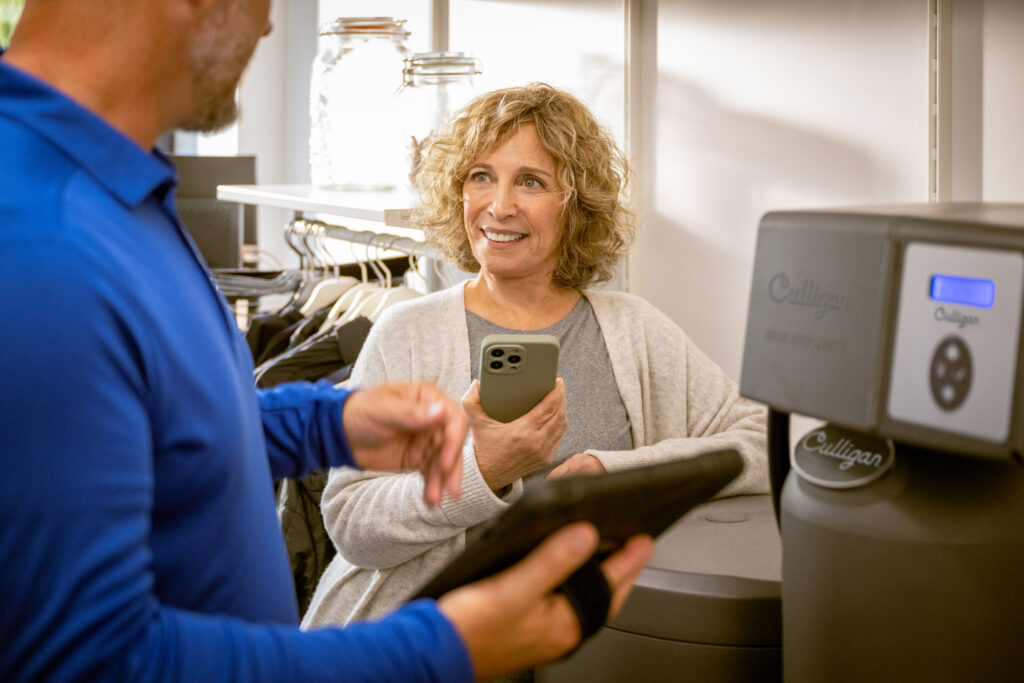
In addition to choosing the right system, Southeast Michigan homeowners have flexible options when it comes to installation, maintenance, and ongoing service. Culligan Southeast Michigan offers both rental and installation solutions, allowing homeowners to choose what best fits their needs and budget.Learn more about Culligan of Southeast Michigan.
Water Softener Services
Water Filter & Reverse Osmosis Services
Start with a Local Water Test
Because water quality varies across Southeast Michigan neighborhoods, the best first step is a professional water test. This helps identify the exact issues in your home and ensures the right system is selected based on your water conditions. Schedule your free water test here.